
Does a Cracked Tooth Need to be Pulled?
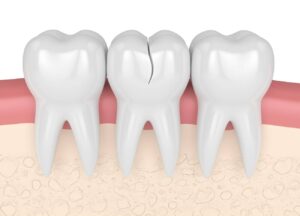
Not always. In fact, most cracked teeth can be repaired and kept for years. Pulling a tooth is usually the very last option—only when the crack is deep, runs below the gum line, or infection has taken hold.
That’s the reassuring part.
What actually happens when a tooth cracks?
A cracked tooth simply means the hard outer layers have split. Sometimes it’s just a surface line. Other times, it travels deeper, closer to the nerve.
Big difference.
Here’s how we usually look at it:
- Tiny surface cracks (often called craze lines). Very common. Usually harmless. Often need no treatment at all.
- Moderate cracks that affect the chewing surface. These can often be stabilised with a filling or, more commonly, a crown. The tooth stays.
- Deeper cracks that reach the nerve. These often need a root canal, followed by a crown to protect what’s left. Still very saveable.
- Cracks below the gum or into the root. This is where saving the tooth becomes difficult. Extraction may be the healthiest choice.
That’s the line we watch closely—how deep it goes.
A simple, real-life scenario
Picture this. Sunday lunch. You bite into something unexpected. An olive stone, maybe. There’s a sharp twinge. Later, you notice a faint line on a back tooth.
We see this all the time.
In the chair, we’ll check a few key things:
- Is the pain sharp only when you bite, or does it linger and throb?
- Does hot or cold set it off?
- How far does the crack travel under bright light and on an X-ray?
If it’s shallow and limited to the biting surface, we may smooth the edge and protect the tooth with a filling or crown.
If it’s reached the nerve—but the root is still healthy—a root canal can remove the damaged nerve, and a crown can hold everything together.
The tooth usually only needs to come out if the crack runs under the gum, splits the tooth into sections, or has caused a serious infection in the surrounding bone.
Quick note here—if you feel pain when you release your bite, not just when you bite down, that can signal a deeper crack. Worth checking sooner rather than later.Two patients, two outcomes
Patient Anita came in with mild pain when chewing. Nothing dramatic. The crack was above the gum, tooth still strong. One crown later, problem solved. She was back to eating comfortably within days.
Patient Mark waited longer. Pain on and off. Then swelling. The crack had travelled into the root, and infection had started. In his case, removing the tooth was the healthiest option—and we planned a replacement straight away.
Timing matters. That’s really the takeaway.
Pull it or save it? A quick guide
Signs a tooth is often saveable:
- Pain is mild to moderate and mainly when chewing
- The crack is above the gum line
- No swelling or lump on the gum
- A filling, crown, or root canal is possible
Signs removal may be needed:
- The crack extends below the gum or into the root
- The tooth is split into separate pieces
- There’s an abscess, deep infection, or bone loss
- Not enough healthy tooth remains to support a crown
If a tooth does need to be removed, it doesn’t mean living with a gap. Implants, bridges, and dentures today look natural. White, not stark. Just right.
Common worries we hear a lot
“Cracks heal on their own.”
Teeth don’t heal like skin. Small cracks tend to worsen over time if ignored.
“It only hurts sometimes, so it can’t be serious.”
Intermittent pain—especially when chewing—is actually a classic cracked-tooth sign.
“If it’s pulled, I’ll always notice the replacement.”
Modern options are designed to blend in. Most people can’t tell the difference.
FAQs on whether a Cracked Tooth Need to be Pulled
- Does a cracked tooth always need to be pulled?
No. Many can be treated with a filling, crown, or root canal instead. - How soon should I see a dentist?
As soon as you can. Early care greatly increases the chance of saving the tooth. - Will a cracked tooth always hurt?
Not always. Some serious cracks cause very little pain at first. - Can I eat normally?
Best to chew on the other side and avoid hard foods until it’s checked.
Ready to have it looked at?
A cracked tooth doesn’t always mean bad news—but waiting can turn a simple fix into an extraction. If something doesn’t feel right, trust that instinct.
For friendly advice and prompt care, you can book an appointment with Bridge Dental and Cosmetic Studio in Isleworth. We’ll assess the crack, talk you through the options, and help you keep your smile comfortable and confident. Sound good?