
What is a Custom Fabricated Abutment for an Implant?
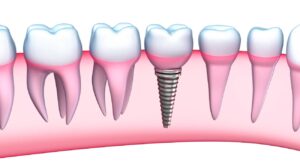
In a dental implant, the abutment is what connects the implant, i.e. the titanium screw that goes in the bone and replaces the tooth root, to the crown which is the part of the implant that is visible and looks like a tooth. A custom abutment is made by first taking a digital impression or scan of the patient’s mouth and then, using CAD/CAM technology, the exact shape is milled from a material like titanium or zirconia. As the abutment is tailored not only to the shape of your gums but also to the angle of your implant, it gives you a much more natural “emergence profile” – the crown seems to be coming out of the gum just like a real tooth.
Such a personalization enables your dentist or laboratory to adjust the implant orientation and place the crown margins at the optimum level, thus facilitating cleaning and supporting the health of the gums around the implant.
Scientific evidence suggests that custom abutments normally have better marginal fit and soft-tissue support than stock abutments which in turn, may lessen the risk of complications such as inflammation or bone loss over time. Besides, custom abutments can do wonders for the aesthetics of your smile, especially, if the implant is in the front of the mouth, or if the implant placement had been difficult, as they allow complete symmetry with the adjacent teeth.
Custom fabricated abutment vs. stock abutment
Stock abutments are those that are mass-produced in specific sizes and shapes and are aimed at simple cases where the implant is in the right position and there are minimal cosmetic requirements.
As a rule, they are less expensive and can be used immediately but do not have the ability to perfectly conform to the gum or an unusual implant angle, thus creating gaps which are plaque traps and making the restoration look less natural. On the other hand, a custom-fabricated abutment is more expensive and requires a longer time for production, however, it ensures a perfect fit, better emergence profile, and a more natural final smile, which, altogether, contribute to improved comfort, function, and implant longevity.