
What is a Partial Denture?
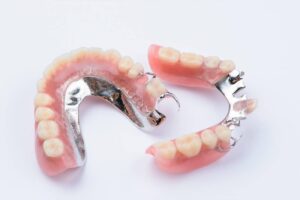
A partial denture is a device made specifically for you, that you can remove, which replaces the teeth that you have lost. A prosthetic tooth is fixed to the base, which is a pink material that simulates the gingiva and is placed in the mouth, and it is also made of the remaining natural teeth. It beautifies your smile, makes the chewing process easier, helps you to speak well, and also, the teeth next to the empty spaces do not get displaced.
The most common partial dentures use some kind of small metal or tooth colored clasps that softly hold the nearby teeth to keep the denture in place thus the biting forces are shared between those teeth and the gum under the denture. They are a kind of London solution a lot of people who want to substitute multiple teeth without having implants for every single gap choose.
How does a partial denture fit over implants?
When a partial denture is placed over implants, the fundamental denture seems the same from the outside but instead of mainly using clasps and suction, it is firmly connected to the dental implants that are concealed under the denture base. Implants are small titanium pieces that are put in the jawbone and they become artificial roots that can bear special denture attachments.
The denture can be attached to the implants in two typical manners:
1. Locator or stud attachments: a small connector that slightly protrudes through the gum is installed on each implant, and the bottom of the denture carries the matching housings so the denture “snaps” on to the studs with a gentle click.
2. Bar and clip systems: a thin bar connects several implants, and clips in the denture hold this bar, thus the forces are transferred along the implants.
Both mechanisms allow you to remove the denture from your hand for cleaning even though the feel when it is in place is firm and stable. Many dental clinics in London use the term implant‑supported partial denture or implant‑retained removable partial denture to describe this.
Step‑by‑step: how the fit is created
1. Assessment and planning in London
During the first consultation, a general dentist or an implant dentist in London evaluates the condition of your gums, the remaining teeth, and the jawbone (usually by means of X‑rays or scans) to determine whether implants can be inserted under a partial denture. At that time, prices and duration are also discussed besides the decision about continuing with a traditional partial, going for one or more implants, or fixed bridge.
2. Implant placement
Implants if it is your decision, are put into the jawbone in the places of missing teeth, mostly under local anaesthetic. The reason for which bone-grafting is sometimes suggested is that the bone may be too thin or soft and this is usually the case for old gaps.
3. Healing and integration
Through several weeks or sometimes even months, the bone grows around the implants in a process called osseointegration, thus the implants become firm enough to carry the denture. Patients during this period are often supplied with a temporary partial denture or an adjusted version of their old denture.
4. Attaching the connectors
After the implants are stable, three are small connectors (abutments, locators, or a bar) that are attached and will be eventually linked to the partial denture. Next, recording the dental impression is done so the lab can create a denture that fits perfectly onto these connectors and also matches the bite.
5. Fitting the implant‑supported partial denture
At the appointment with the fit, the new partial denture is tried in, adjusted, and then clipped or snapped onto the implants to check comfort, bite, and look. The dentist will teach you how to put in and take out the denture, how it should be when it is fully inserted, and how to clean both the implants and the space under the denture.
Benefits compared with a regular partial denture
First, a partial denture over implants provides a number of benefits as opposed to a traditional clasp‑supported partial denture.
1. Stability and confidence: the denture moves less while eating, laughing, or talking, which can give you comfort in social or professional situations.
2. Better chewing efficiency: usually firmer foods can be handled more easily because the implants facilitate the biting forces transmission most effectively
3. Bone preservation: the implants keep the bone under the jaw stimulated, thus the bone loss that typically follows tooth loss is slower.
4. Protection for remaining teeth: less dependence on metal clasping can reduce the load and wear that neighboring teeth get.
Possible limitations and risks
Just like any other treatment, the patient needs to weigh the pros and cons before opting for a partial denture over implants.
1. Surgery and healing: implant placement is a minor surgical procedure and a healing period is required before the final denture can be fitted.
2. Cost: the first cost is higher than that of a regular partial denture, but some patients consider that the better comfort and longer life of the denture make up for it.
3. Maintenance: perfect oral care and regular visits to the dentist are necessary to keep the implants in good condition and the denture fitting well.
4. Not suitable for everyone: certain health problems, smoking, or very limited bone may be factors that influence whether implants are an option or not.