
What Type of Tooth Implant is Best?
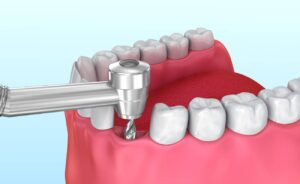
Losing a tooth can not only impact your look and confidence but also your overall oral health. Dental implants are undoubtedly the best and the most durable choice to fill in the gap left by your natural teeth. However, they have several types, and picking the right one isn’t always straightforward. This guide shows the different types of tooth implants, their pros and cons, and points you to the factors that can help you make the right decision for your individual needs.
Main Types of Tooth Implants
1. Endosteal Implants (Titanium Screw Implants)
a. The majority of people who have dental implants use this type, which is also the best-known and widely utilized.
b. They are made from titanium, and the prod is shaped like a tiny screw or cylinder. The screw is fixed into the bone behind your teeth through a surgical operation.
c. This technique provides the best support because through the procedure the screw binds with the bone.
d. They can be used for most restorations be it one tooth replacement, bridges, place dentures on the jawbone, etc.
e. These implants can survive a long time period, provided they are kept clean and sterilized; the whole structure will be very similar to the human dental system in terms of both function and appearance.
2. Subperiosteal Implants
a. It is an artificial skeleton made of metal that is on the surface of or over the jaw bone but still under the gums.
b. Are allowed only for patients with little the place where the metal will be fixed patients whose jawbones are so weak that they cannot be implanted with endosteal implants because there is no sufficient support for them.
c. The intervention is much simpler and the patient undergoes recovery quickly.
d. They are most operationally used for the stabilization of removable dental prostheses.
e. As they are not tied to the bone, their firm holding is less than that of endosteal implants.
3. Zygomatic Implants
a. They can be a remedy in a situation of extremely losing upper jaw bone when insertion of a normal implant in the mouth isn’t feasible.
b. Unlike the jawbone implant, the implant is fixed in the cheek bone (zygoma).
c. As a result, there is no necessity for a bone graft.
d. The operations are more difficult, and the recovery period is longer, but there is a definitive solution for stabilizing the most challenging cases.
4. Zirconia Implants
a. A good titanium dental implant can be replaced with one made out of ceramic materials.
b. Being of a white shade, it is more attractive and hence can be used for the front teeth that are more visible.
c. The relative absence of such problems as allergic reactions and inflammation makes this material even more appealing.
d. As it is weaker than titanium, it is used only in simple cases.
How to Find the Right Tooth Implant
a. Bone Guidance and Quantity: For depth and density of bone enough for Endosteal implant requirements. If you are suffering from bone loss, subperiosteal and zygomatic implants might be what you need.
b. Number of Missing Teeth: Generally, single tooth replacement involves the use of endosteal implants, while multiple teeth may be replaced with implant-supported bridges or dentures.
c. Cosmetic Preferences: There is no doubt that zirconia implant gives the best visual effect.
d. Anatomical Problems: Endosteal implants entail bone drilling, while subperiosteal don’t, and zygomatic implants are the most sophisticated.
e. Money and Recuperation: Prices are differently determined based on which type of implant you choose and how complicated the procedure is and so will the recovery time be.
f. Health Condition: Your physical condition and the dental environment will have great influence on the success of the implants.
Additional Tips and Considerations
a. Don’t hesitate to talk to a professional dentist or oral surgeon who will not only examine your oral health but also assess your bone and then advise you accordingly.
b. If you follow a decent oral hygiene routine and visit your dentist regularly, a dental implant can be your lifetime companion.
c. Thanks to the ongoing progress in digital dentistry, repair is more precise and the success rate is higher.
d. Find out about recovery time, care, and if there are any possible risks involved.